In four months, nearly half a million applications have been reduced from the pandemic backlog
December 19, 2022 — Today, Canada’s Minister of Immigration, Refugees and Citizenship, Sean Fraser, highlighted the progress made this year, in reducing the backlog in applications in IRCC’s inventories beyond its service standards.
There is, however, a recent report suggesting that IRCC has assigned thousands of applications to inactive immigration officers. Therefore, it is believed that in an attempt to reduce this backlog, IRCC archives a record-breaking year for immigration processing.
Since August, IRCC reports that they have reduced its overall inventory by nearly half a million applications.
“The department remains on track to meet its goal to process 80% of new applications within service standards”. They added it applies “for most programs and continues to make strides in improving processing”. They are hoping this will result in shorter wait times.
As of November 30 this year, IRCC had processed over 670,000 study permits, compared to more than 500,000 during the same time period last year.
Citizenship
Canada is proud to have one of the highest naturalization rates in the world. IRCC encourages all newcomers to complete their journey by becoming Canadian citizens.
“IRCC expects a record number of new Canadian citizens in 2022–2023, with approximately 251,000 new citizens welcomed from April to November—surpassing the total number of new Canadian citizens for the last fiscal year. As a result, more than 70% of applications in the citizenship inventory are now within service standards.”
Using immigration to address labour shortages
Implementing measures to allow foreign nationals whose post-graduation work permits (expiring between September 20, 2021, and December 31, 2022) the opportunity to work in Canada for an additional 18 months, by extending their work permit or applying for a new one.
This change makes it easier for foreign-born physicians to remain in Canada allowing them to practice and bolster the healthcare system.
The Foreign Credential Recognition Program, invests approximately $27.1 million annually. The contribution to provinces and territories, regulatory bodies, and other stakeholders aims to support the labour market integration of skilled newcomers.
Making changes to the Immigration and Refugee Protection Act by selecting immigrants based on key attributes that support identified economic priorities For example educational credentials, work experience, or official language knowledge.
The Government of Canada will continue to provide monthly updates on the progress in reducing backlogs. Additionally, the steps being taken to improve client experience, reunite families and address labour shortages in Canada.
In their press release, IRCC mentions: “We know there is still more work to do”, and that they will focus “on building an immigration system that works well for newcomers, visitors, our businesses, and all Canadians.”
Immigration is critical to our economy and our communities. It’s why we have taken action to strengthen Canada’s immigration system by reducing wait times and modernizing services so they work better for everyone: https://t.co/Bw5qfuKCo5
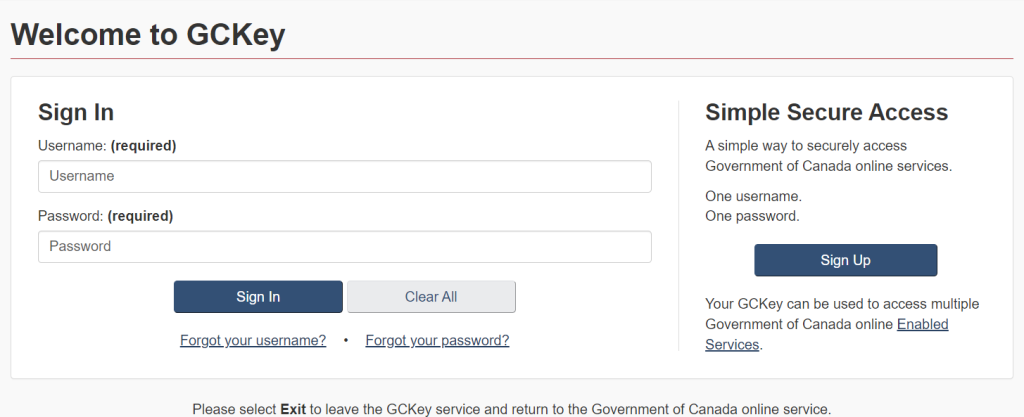
A GCKey is required for the online submission of Canadian immigration or visa applications and is a secure way to communicate with online Canadian government services by using special electronic credentials.
GCKey is a service offered by the Government of Canada that generates login information (username and password) for use with online federal government services. If you do not have, or prefer not to utilize, a credential with one of the Sign-In Partners you can use the GCKey service.
As a result, having it is convenient and practical because you do not need to keep track of multiple usernames and passwords.
If you’ve already created an account, you can log in here. If you’re a new user, you must select “Sign up” from the Simple Secure Access menu on the right side of the screen.
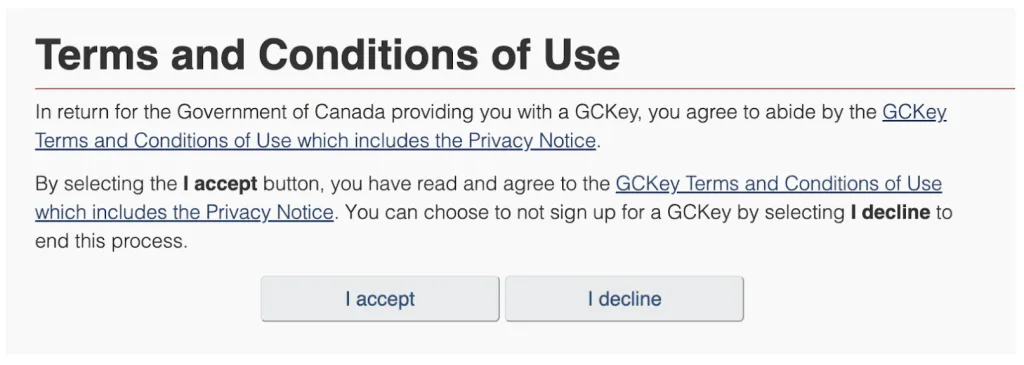
The Terms and Conditions will appear after you click on the sign-up button. To proceed, click ‘I accept’.
Finally, you need to create your User Name and Password. After deciding on your username, you must select a secure password.
Important:
There must be between eight and sixteen characters in your password. It must not contain three or more consecutive characters from your Username and must at least have one upper case letter, one lower case letter, and one digit. Lastly, remember not to share your password and keep it in a safe place. Now you are all done!
Can I use the same GCKey to access several services?
Yes. You can use the same GCKey credential to access all available online services, with the exception of the CRA services. Using the same credential to access many services is convenient, as you don’t have to remember several username and passwords.
To access the CRA’s login services, you must either use one of the Sign-In Partners or register for a CRA User ID and password.
What services do I need Sign-In Partner or GCKey for?
Employers and temporary workers to benefit from family work permits to address labour shortages
As the Canadian economy recovers, employers, including tourism industry employees, have had difficulty finding workers. However, an announcement stated that temporary workers would now be eligible to obtain work permits for their families
On Friday, Minister of Immigration, Refugees and Citizenship, Sean Fraser announced that family members of temporary foreign workers will be eligible to apply for work permits.
Canada is expanding work permits for family members! Starting in 2023, spouses and children of a principal applicant will be eligible to work in Canada. https://t.co/einP1Op4RC
“Expanding the eligibility for work permits to family members accompanying the principal applicant to Canada will help address labour shortages by assisting employers in finding the workers they need,” he said in a press statement.
Before this announcement, spouses were only eligible for a work permit if the principal applicant worked in a high-skill occupation. However, temporary workers will benefit from family work permits starting in 2023.
Families will be kept together as part of this temporary measure. By that, workers’ emotional well-being, physical health, and financial security will improve. Ultimately, the goal is to provide the worker with a better integration into their work environment and community.
Phase 1 will enable family members of workers coming to Canada through the high-wage stream of the Temporary Foreign Worker Program or the International Mobility Program to apply for an open work permit.
Phase 2 aims to expand the measure to the family members of workers from the low-wage stream of the Temporary Foreign Worker Program, following consultations.
Phase 3 will include consultation with agricultural partners and stakeholders to assess operational feasibility for expanding the measure to family members of agricultural workers.
Canada has issued over 645,000 work permits between January and October 2022—nearly 4 times more than the 163,000 issued over the same period in 2021.
“Should I apply for a work permit or a student permit? Is there a better option for me? Which path should I follow?”. We receive this type of question all the time and, to be honest, there is not a straight answer as a number of factors go into this decision. However, you can use these three questions to help you decide.
By having realistic expectations, you can work efficiently towards your immigration goals. So let’s dive right into it!
Q1: What is my English proficiency? Is it important to work or study in Canada?
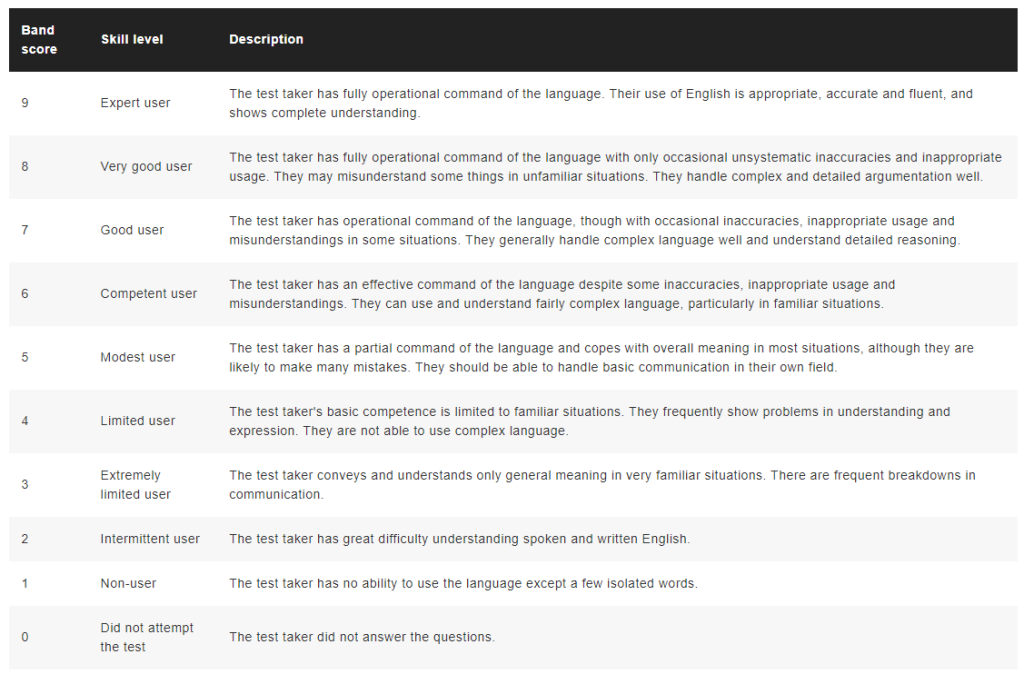
This is key to determining the program you can apply to. On one hand, if you have a beginning level of English, perhaps the best and only option is to start a study program before thinking about working. On the other hand, if your proficiency is higher (certified by a standardized test such as IELTS) you can consider other immigration options, like the Provincial Nominee Program.
The IELTS scale (1)
Q2: How much money can I invest? Studying and working are compatible?
Immigrating always involves a considerable cost. However, determining how much you’re willing to invest can make or break your immigration options.
For example, you must consider the annual cost of living in the city or province you wish to live in, the average salary for your desired job, and how long it will take for you to recoup your investment.
In addition, there are other factors to look at such as working while studying, the number of hours you are allowed to work, the industry you are planning to work in, etc.
Check out the cost of living of the most popular cities ranked from lower to higher cost of living.
Maybe you initially planned on working in Canada, but you do not qualify for any program. Don’t let that discourage you! After all, there are several pathways to immigrating to Canada; each step counts toward achieving your ultimate goal.
Changes to the National Occupational Classification (NOC) and how they affect Express Entry applicants
A number of changes have been made to the National Occupational Classification (NOC) system recently, which have an impact on how your work experience must be listed in your Express Entry profile and eligibility for some permanent residence (PR) candidates.
The Canadian immigration application process can become confusing and stressful if eligibility criteria or the way information is entered are changed.
This shift in eligibility criteria will affect 100+ immigration programs in Canada, including the Express Entry program.
What is the NOC? How does it work?
The National Occupational Classification (NOC) is the national reference for occupations in Canada. It provides a systematic classification structure that categorizes the entire range of occupational activity in Canada. This works for collecting, analyzing, and disseminating occupational data for labor market information and employment-related program administration.
In addition, occupational information is critical for the provision of the labor market and career intelligence, skills development, occupational forecasting, labor supply and demand analysis, employment equity, and numerous other programs and services.
What changes are being made under NOC 2021?
From November 16, 2022, changes to the National Occupational Classification (NOC) had been made to replace the NOC 2016. This represents an introduction to new terminology and a revised classification structure for occupations. Here are the three significant changes being made under NOC 2021:
NOC 2021 accounts for the differences between educational requirements and formal training, and consequently, the new classification reflects the knowledge and skills gained through on-the-job work experience.
NOC 2021 replaces the former four-category “Skill Level” structure with six TEER levels, from TEER 0 to 5. TEER levels represent the Training, Education, Experience, and Responsibilities for each occupation, with TEER 0 having the highest requirements and TEER 5 the lowest. The table below describes TEER levels and explains how they differ from Skill Levels under NOC 2016:
TEER
Requirements
How it differs from NOC 2016 Skill Levels
TEER 0
Management
Management was classified as Skill Type 0.
TEER 1
University degree (bachelor’s, master’s or doctorate); OR
Previous experience and subject matter expertise in a related TEER 2 occupation.
Skill Level A required a university degree but did not account for prior experience or expertise in related occupations.
TEER 2
Completion of a two- to three-year post-secondary program (diploma or certificate) at community college, institute of technology or CÉGEP; OR
Completion of a two- to five-year apprenticeship training program; OROccupations with supervisory or safety responsibilities (e.g. police officers and firefighters); ORSeveral years of experience in a related TEER 3 occupation.
The requirements under Skill Level B have been split into TEER 2 and 3.
The TEER levels also account for prior experience in related occupations, which was not considered eligible under Skill Level B.
TEER 3
Completion of a post-secondary college program shorter than two years (diploma or certificate); OR
Completion of an apprenticeship training program of under two years; OROver six months of on-the-job training, training courses or specific experience in addition to some secondary (school) education; ORSeveral years of experience in a related TEER 4 occupation.
The requirements under Skill Level B have been split into TEER 2 and 3.
The TEER levels also account for prior experience in related occupations, which was not considered eligible under Skill Level B.
TEER 4
Completion of secondary school; OR
Several weeks of on-the-job training with some secondary education; ORExperience in a related TEER 5 occupation.
Skill Level C included up to two years of on-the-job training with some secondary education, whereas under TEER 4, several weeks of on-the-job training is accepted.
TEER 4 also accounts for prior experience in related occupations.
TEER 5
Short work demonstration and no formal educational requirements.
Similar to Skill Level D.
Also, the new NOC 2021 has changed from a four to a five-digit coding system. Let’s use Advertising, marketing and public relations managers as an example to explain the NOC classification hierarchy. Under NOC 2016 its code was 0124; under NOC 2021 its code is 10022. Here we breakdown the differences between the two codes for Advertising, marketing and public relations managers:
Level
Details
Under NOC 2021 (10022)
Under NOC 2016 (0124)
Broad occupational category (first digit of code)
Business, finance and administration occupations (1)
1
0 (Management occupations)
Major group (TEER or Skill Level) (second digit of code)
TEER 0 – Management (0)
10
01 (Skill level A)
Sub-major group
Specialized middle management occupations in administrative services, financial and business services and communication except broadcasting (0)
100
N/A
Minor group
Managers in financial and business services (2)
1002
012 (Managers in financial and business services)
Unit group (or occupation)
Advertising, marketing and public relations managers (2)
10022
0124
This is how the skill type categories of the current NOC system match the TEER categories of the 2021 NOC system:
NOZ 2016
NOK 2021
Ability type 0
TAR 0
Skill level A
TEA 1
Skill Level B
TEA 2
Skill Level B
TEA 3
Skill level C
TEA 4
Skill level D
TEA 5
Updated NOC 2021 Eligibility Criteria for Express Entry
Eligibility Criteria
Canadian experience class
Federal skilled worker program
Federal handicraft programme
Knowledge of English or French
CLB 7 for TEER 0 or TEER 1 occupations; CLB 5 for TEER 2 or TEER 3 occupations
KLB 7
CLB 5 for speaking and listening; CLB 4 for reading and writing
Type/level of work experience
Canadian work experience in an occupation listed in one or more of these NOC TEER categories: TEER 0, TEER 1, TEER 2, or TEER 3.
Work experience in an occupation listed in one of these NOC TEER categories: TEER 0, TEER 1, TEER 2 or TEER 3.
Work experience in a trade in key groups of TEER 2 or TEER 3.*
Scope of work experience
One year in Canada in the last three years (either a combination of full-time or part-time work).
One consecutive year within the last 10 years (combination of part-time, full-time, or more than one full-time job).
Two years within the last five years (either combination of full-time or part-time employment)
job offer
Not required.
Not required, but you can earn Eligibility Criteria (FSW) points if you have a valid job offer.
A valid job offer for full-time employment for a cumulative period of at least one year, or a certificate of qualification in the craft issued by a Canadian provincial, territorial or federal agency.
education
Not required.
Secondary school diploma required. You can get more Eligibility Criteria Points (FSW) for your post-secondary education.
Do I need to update the NOC codes in my existing Express Entry profile?
If you have not yet received an ITA, you must update your Express Entry profile with new NOC information by November 16, 2022. Creating an Express Entry profile after November 16, 2022 means using the NOC 2021 classification. For those who have already received an ITA, you should continue your application using NOC 2016 codes. Therefore, when you fill out your PR application, use NOC 2016 codes for your past experiences.
How is your particular situation affected by this?
A candidate’s IRCC action requirements will vary according to where they are in their Express Entry journey. Therefore, the best course of action is to speak with a licensed consultant and analyze your situation together to find the best alternative for your case.
Contact us today! One of your licensed immigration consultants will be happy to help you.