In the most recent draw held on December 06, the IRCC (Immigration, Refugees and Citizenship Canada) issued 4,750 invitations to apply to eligible candidates.
This targeted all-program Express Entry draw, with a minimum Comprehensive Ranking System (CRS) score of 561.
The Express Entry system has resumed draws after a gap since October 26th. While the reason for the delay is unclear, some applicants reported encountering problems with the Express Entry Profile Builder in mid-November. This issue was subsequently resolved by IRCC.
The most recent draw, held on October 26th, was for healthcare occupations and issued Invitations to Apply (ITAs) to 3,600 candidates. The minimum Comprehensive Ranking System (CRS) score required for this draw was 431.
Understanding Express Entry
Express Entry is an innovative application management system that oversees the Federal Skilled Worker Program, the Canadian Experience Class, and the Federal Skilled Trades Program. Candidates in the Express Entry pool are assessed based on various factors like work experience, language ability, education, and age. They are assigned a Comprehensive Ranking System score, and those with the highest scores are most likely to receive an ITA.
Benefits of Express Entry
Moreover, Express Entry has revolutionized how Canada selects its immigrants, prioritizing those who bring valuable skills and experience to the country. With unparalleled efficiency, this program processes applications at lightning speed, providing applicants with the opportunity to settle in Canada quickly and effectively.
Eligibility and Requirements
To succeed in Express Entry, meeting certain requirements is paramount. Your work experience, education, language proficiency, and other factors will determine your score in the Comprehensive Ranking System (CRS). Keep your documents in order and strive to reach the minimum required score to receive an invitation.
Tips to Increase Your Chances
Want to enhance your chances of receiving an ITA in future draws? Here are some tips to boost your Express Entry profile:
Improve Language Skills: Dedicate time to enhancing your language proficiency in English or French. Higher language scores can significantly improve your CRS score.
Job Offer Advantage: Having a valid job offer from a Canadian employer can increase your CRS score and chances of receiving an ITA.
Maximize Education: Pursue higher education to gain additional points in the CRS system and stand out in future draws.
Stay Informed: Stay updated with the latest Express Entry draws and changes to the selection criteria.
Professional Guidance: Furthermore seek assistance from experienced immigration consultants to navigate the Express Entry process smoothly and optimize your profile.
How can we help you?
When you receive an ITA (Invitation to Apply), a new series of steps begins for you to obtain your permanent residency in Canada.
Get in touch with us as soon as possible to get access to our Post-ITA (post invitation to apply) services.
Our expert immigration consultants are here to guide you through the Express Entry process and ensure a seamless and successful journey to permanent residency in Canada! You can speak with one of our consultants by clicking the button below.
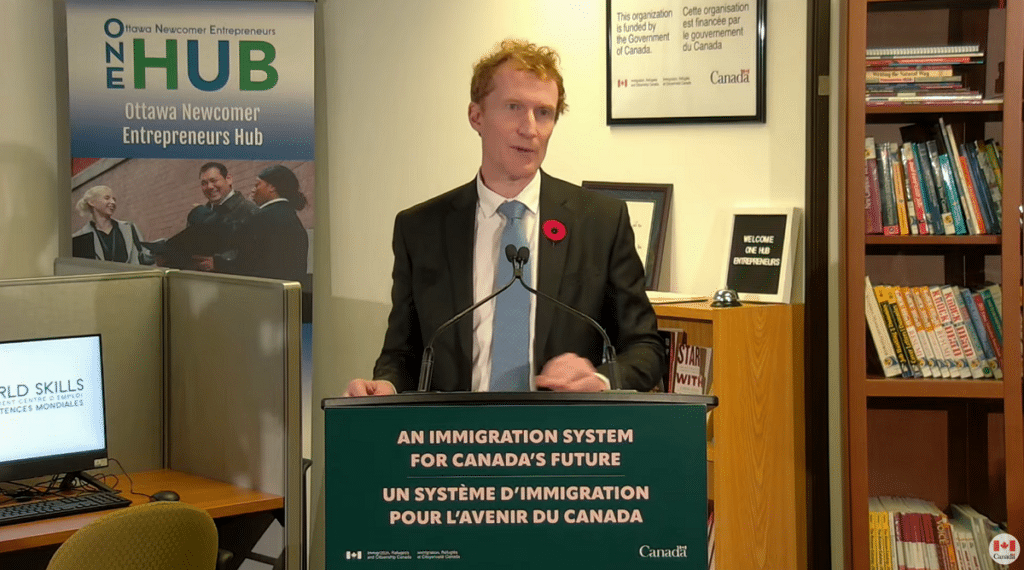
On October 31, 2023, the Canadian government announced a new immigration plan to improve the system and align it with the needs of the labour market. The plan also includes a focus on helping newcomers settle in Canada and creating a comprehensive and coordinated growth strategy.
The new plan is a sign of the government’s commitment to welcoming immigrants and building a strong and diverse society. It includes a number of important initiatives to improve the immigration system, align immigration with the needs of the labour market, and help newcomers settle in Canada.
Main points
Modernize the immigration system with digital platforms. This will include creating a single online window into immigration programs, improving automation, and enabling digital self-service.
Align immigration with labour market requirements. IRCC will identify the essential talents that Canada needs, the newcomers who have these skills, and how to best connect them to available positions. The government will also make it easier for international students and temporary workers with in-demand skills to stay in Canada.
Help newcomers settle in Canada. The government will investigate further alternatives for developing an integrated strategy to manage housing, health care, and infrastructure across federal government departments, as well as in close partnership with provinces, territories, and municipalities.
Modernize the Immigration System with Digital Platforms
One of the key goals of the new plan is to modernize the immigration system with digital platforms. This will include creating a single online window into immigration programs, improving automation, and enabling digital self-service.
The government expects that these changes will expedite application processing, increase program integrity, and make the immigration process more transparent and human-centered.
Align Immigration with Labour Market Requirements
The new immigration plan also emphasizes the need to align immigration with Canada’s labour market requirements. To do this, IRCC will identify the essential talents that Canada needs, the newcomers who have these skills, and how to best connect them to available positions.
Help Newcomers Settle in Canada and Create a Comprehensive and Coordinated Growth Strategy
In addition to attracting top talent, the new immigration plan also focuses on helping newcomers settle in Canada and creating a comprehensive and coordinated growth strategy. This includes things like housing and healthcare.
The government recognizes that some newcomers leave Canada due to difficulties with housing and getting their international credentials recognized. To address these issues, IRCC will investigate further alternatives for developing an integrated strategy to manage housing, health care, and infrastructure across federal government departments, as well as in close partnership with provinces, territories, and municipalities.
What could this announcement be?
The Canadian government is expected to announce the new immigration levels plan 2024-2026 on November 1. It is possible that the immigration minister could also announce improvements to the Canadian immigration system in response to the recommendations of the Office of the Auditor General.
Conclusion
The new Canada immigration plan is a sign of the government’s commitment to welcoming immigrants and building a strong and diverse society. The plan includes a number of important initiatives to improve the immigration system, align immigration with the needs of the labour market, and help newcomers settle in Canada.
How can CanAm help you?
We are a team of experienced immigration consultants who can help you with all aspects of the immigration process. We can help you choose the right immigration program for your needs, prepare your application, and answer any questions you may have.
We understand that the immigration process can be complex and daunting. That’s why we’re here to help you every step of the way. We’ll work with you to create a personalized immigration plan and help you achieve your immigration goals.
Here are some of the specific ways we can help you:
Choose the right immigration program: There are many different immigration programs available, and it can be difficult to know which one is right for you. We can assess your eligibility for different programs and help you choose the one that is the best fit for your needs and goals.
Prepare your application: We can help you prepare all of the necessary documentation for your immigration application. We will also review your application carefully to ensure that it is complete and accurate.
Answer your questions: We understand that you may have many questions about the immigration process. We are here to answer your questions and provide you with the information you need to make informed decisions.
If you are interested in immigrating to Canada, we encourage you to contact us today. We would be happy to answer your questions and help you get started on your immigration journey.
On October 27, 2023, the IRCC announced new wage requirements for LMIA-based work permits in Canada, effective January 1, 2024. These changes are designed to ensure that temporary foreign workers are paid fairly and that Canadian workers are not disadvantaged.
Key Changes
Employers will be required to check temporary foreign workers’ wages every year to make sure they keep up with wage increases for their job and region of work.
Employers in seven selected sectors will continue to be allowed to hire up to 30% of their workforce in low-wage positions through the TFWP.
The maximum length of work will remain at two years for jobs paying less than the provincial or territorial median hourly wage.
The maximum validity time of the Labour Market Impact Assessment (LMIA) will be reduced from 18 months to 12 months.
What are the new wage requirements?
Under the new rules, employers will be required to pay temporary foreign workers the prevailing wage for their job and region of work. The prevailing wage is defined as the median hourly wage paid to Canadian workers in the same occupation and region.
Employers can find the prevailing wage for a particular occupation and region by using the Government of Canada’s Job Bank website.
How often do employers need to check the prevailing wage?
Employers must check the prevailing wage every year and make sure that their temporary foreign workers are being paid at least that amount. If the prevailing wage increases, employers must also increase the wages of their temporary foreign workers.
How employers can comply
Employers can comply with the new wage requirements by:
Reviewing temporary foreign workers’ wages every year and adjusting them as needed to keep up with wage increases for their job and region of work.
Using the Government of Canada’s Job Bank Wage Search tool to determine the prevailing wage for their job and region of work.
Maintaining documentation of their wage review process and the wages paid to temporary foreign workers.
How temporary foreign workers can protect themselves
Temporary foreign workers can protect themselves by:
Knowing their rights and the requirements of the TFWP.
Keeping a record of their wages and hours worked.
Contacting the Employment Standards Branch in their province or territory if they have any concerns about their wages or working conditions.
What are the consequences for employers who do not comply with the new wage requirements?
Employers who do not comply with the new wage requirements may be subject to administrative penalties, such as fines. They may also be denied future LMIAs.
What other changes are being made to the Temporary Foreign Worker Program (TFWP)?
In addition to the new wage requirements, the government is also making a number of other changes to the TFWP, including:
Continuing to allow employers in seven selected sectors to hire up to 30% of their workforce in low-wage positions through the TFWP.
Keeping the maximum length of work at two years for jobs paying less than the provincial or territorial median hourly wage.
Changing the maximum validity time of the Labour Market Impact Assessment (LMIA) from 18 months to 12 months.
Why these changes are important
The new wage requirements are designed to address concerns about wage suppression and ensure that temporary foreign workers are paid at the same rate as Canadian workers for doing the same job. The reduction in the validity time of the LMIA is designed to better reflect the job market and ensure that employers are hiring temporary foreign workers only when necessary.
How can CanAm help you?
Our Canadian immigration firm has extensive experience helping businesses and individuals with the Temporary Foreign Worker Program. We can help you to:
If you are an employer who hires temporary foreign workers, or if you are a temporary foreign worker who has questions about the new wage requirements or other changes to the TFWP, we can offer you a free consultation call. We can help you to understand the changes and ensure that you are in compliance with the law.
In the most recent draw held on October 24, the IRCC (Immigration, Refugees and Citizenship Canada) issued 1,548 invitations to apply to eligible candidates.
This targeted Provincial Nominee Program candidates, with a minimum Comprehensive Ranking System (CRS) score of 776.
In the latest Express Entry draw, which took place on October 10, 2023, 3,725 candidates from all immigration programs were invited to apply for permanent residence in Canada. The minimum Comprehensive Ranking System (CRS) score required for this draw was 500.
Express Entry is an innovative application management system that oversees the Federal Skilled Worker Program, the Canadian Experience Class, and the Federal Skilled Trades Program. Candidates in the Express Entry pool are assessed based on various factors like work experience, language ability, education, and age. They are assigned a Comprehensive Ranking System score, and those with the highest scores are most likely to receive an ITA.
Benefits of Express Entry
Moreover, Express Entry has revolutionized how Canada selects its immigrants, prioritizing those who bring valuable skills and experience to the country. With unparalleled efficiency, this program processes applications at lightning speed, providing applicants with the opportunity to settle in Canada quickly and effectively.
Eligibility and Requirements
To succeed in Express Entry, meeting certain requirements is paramount. Your work experience, education, language proficiency, and other factors will determine your score in the Comprehensive Ranking System (CRS). Keep your documents in order and strive to reach the minimum required score to receive an invitation.
Tips to Increase Your Chances
Want to enhance your chances of receiving an ITA in future draws? Here are some tips to boost your Express Entry profile:
Improve Language Skills: Dedicate time to enhancing your language proficiency in English or French. Higher language scores can significantly improve your CRS score.
Job Offer Advantage: Having a valid job offer from a Canadian employer can increase your CRS score and chances of receiving an ITA.
Maximize Education: Pursue higher education to gain additional points in the CRS system and stand out in future draws.
Stay Informed: Stay updated with the latest Express Entry draws and changes to the selection criteria.
Professional Guidance: Furthermore seek assistance from experienced immigration consultants to navigate the Express Entry process smoothly and optimize your profile.
How can we help you?
When you receive an ITA (Invitation to Apply), a new series of steps begins for you to obtain your permanent residency in Canada.
Get in touch with us as soon as possible to get access to our Post-ITA (post invitation to apply) services.
Our expert immigration consultants are here to guide you through the Express Entry process and ensure a seamless and successful journey to permanent residency in Canada! You can speak with one of our consultants by clicking the button below.
Canada launches fast-track work permit program for Filipinos. The program is designed to help Canadian employers fill skilled labor shortages and to attract Filipino workers to Canada.
The new program is open to Filipino workers who have a job offer from a Canadian employer in a TEER 0 or 1 occupation under the National Occupational Classification (NOC) system. TEER 0 occupations are the highest-skilled and most in-demand occupations in Canada. TEER 1 occupations are also in high demand, but require less specialized training or experience.
Filipino workers who apply for the new program must also have a valid passport and meet the medical and security requirements for entering Canada.
The processing time for work permit applications under the new program is expected to be two weeks. This is significantly faster than the standard processing time for work permit applications, which can take several months.
Benefits of the program for Filipino workers
The new fast-track work permit program offers a number of benefits to Filipino workers, including:
Fast processing times: Work permit applications under the new program are expected to be processed within two weeks.
No need for a Labour Market Impact Assessment (LMIA): Filipino workers who apply for the new program will not need to obtain an LMIA from the Canadian government. An LMIA is a document that demonstrates that there is a need for a foreign worker in a particular position.
Open to a wide range of occupations: The new program is open to Filipino workers in a wide range of occupations, including skilled trades, healthcare, and technology.
Opportunity to immigrate to Canada: Filipino workers who gain work experience in Canada under the new program may be eligible to immigrate to Canada permanently.
Benefits of the program for Canadian employers
The new fast-track work permit program also offers a number of benefits to Canadian employers, including:
Access to a large pool of skilled workers: The Philippines has a large population of skilled workers, many of whom are eager to work in Canada.
Reduced hiring costs: The new program eliminates the need for Canadian employers to obtain an LMIA, which can be a costly and time-consuming process.
Increased productivity: Hiring skilled workers from the Philippines can help Canadian employers to increase their productivity and competitiveness.
Impact of the program on the Canadian economy
The new Canada-Philippines fast-track work permit program is expected to have a positive impact on the Canadian economy. By helping Canadian employers to fill their labor needs, the program will contribute to economic growth and job creation.
Conclusion
The new fast-track work permit program is a positive development for both Canada and the Philippines. It will help Canadian employers fill their labor needs and provide Filipino workers with an opportunity to live and work in Canada.
The program is also a reflection of the strong relationship between the two countries. Canada and the Philippines have a long history of cooperation on a range of issues, including trade, investment, and immigration.
The new fast-track work permit program is a welcome addition to the suite of programs and initiatives that are designed to attract and retain skilled workers from around the world. The program will help Canada to remain competitive in the global economy and to build a more prosperous future for all Canadians.
If you are a Canadian employer who is interested in hiring Filipino workers under the new fast-track program, our expert immigration consultants are here to guide you through the process and ensure a seamless and successful journey! You can speak with one of our consultants by clicking the button below.
In the most recent draw held on October 10, the IRCC (Immigration, Refugees and Citizenship Canada) issued 3,725invitations to apply to eligible candidates.
This targeted all-program Express Entry draw, with a minimum Comprehensive Ranking System (CRS) score of 500.
Express Entry is an innovative application management system that oversees the Federal Skilled Worker Program, the Canadian Experience Class, and the Federal Skilled Trades Program. Candidates in the Express Entry pool are assessed based on various factors like work experience, language ability, education, and age. They are assigned a Comprehensive Ranking System score, and those with the highest scores are most likely to receive an ITA.
Benefits of Express Entry
Moreover, Express Entry has revolutionized how Canada selects its immigrants, prioritizing those who bring valuable skills and experience to the country. With unparalleled efficiency, this program processes applications at lightning speed, providing applicants with the opportunity to settle in Canada quickly and effectively.
Eligibility and Requirements
To succeed in Express Entry, meeting certain requirements is paramount. Your work experience, education, language proficiency, and other factors will determine your score in the Comprehensive Ranking System (CRS). Keep your documents in order and strive to reach the minimum required score to receive an invitation.
Tips to Increase Your Chances
Want to enhance your chances of receiving an ITA in future draws? Here are some tips to boost your Express Entry profile:
Improve Language Skills: Dedicate time to enhancing your language proficiency in English or French. Higher language scores can significantly improve your CRS score.
Job Offer Advantage: Having a valid job offer from a Canadian employer can increase your CRS score and chances of receiving an ITA.
Maximize Education: Pursue higher education to gain additional points in the CRS system and stand out in future draws.
Stay Informed: Stay updated with the latest Express Entry draws and changes to the selection criteria.
Professional Guidance: Furthermore seek assistance from experienced immigration consultants to navigate the Express Entry process smoothly and optimize your profile.
How can we help you?
When you receive an ITA (Invitation to Apply), a new series of steps begins for you to obtain your permanent residency in Canada.
Get in touch with us as soon as possible to get access to our Post-ITA (post invitation to apply) services.
Our expert immigration consultants are here to guide you through the Express Entry process and ensure a seamless and successful journey to permanent residency in Canada! You can speak with one of our consultants by clicking the button below.






 Useful Resources for Canada
 Useful Resources for U.S.
 Our Local Immigration Services


