Dec 23, 2014 | Work Permits
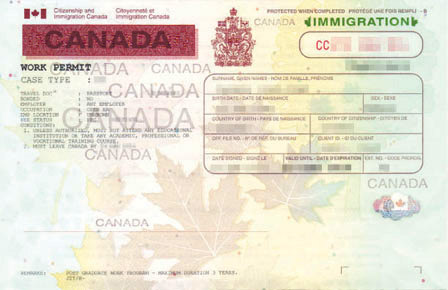
Effective December 22, 2014 and as part of a 1 year trial, Citizenship & Immigration Canada (CIC) will be issuing Open Work Permits to certain spouses or common-law partners who are applying for permanent residence from inside Canada. Previously, sponsored spouses would have to wait until first stage approval to be issued open work permits. Since first stage approval is taking nearly 16 months, it creates major hardships in that these people cannot work while living in Canada waiting for their applications to be finalized.
Applicants who have already submitted their application for permanent residence under the Spouse/Common-Law class but have not yet applied for an open work permit should do so immediately.
If an applicant has already received an approval in principal, they have the option of applying for a work permit online.
Applicants who have yet to submit their applications for permanent residence should also complete an application for a work permit and submit along with their application for permanent residence.
For more information please contact our office.

Jun 6, 2014 | Work Permits
As of today, and effective immediately, Employment and Social Development Canada (ESDC) is now requiring all employers, whether hiring temporary foreign workers from abroad, or those local in Canada on post-graduation work permits to provide evidence of recruitment efforts.
Prior to today, employers who were hiring international graduates on post-graduation work permits were exempt from having to advertise and provide proof of recruitment efforts. As of today, ESDC has ended the exemption.
Employers who wish to submit Labour Market Opinion (LMO) applications must meet all requirements of the applicable stream under which they are submitting an application.
For more information on employing temporary foreign workers whether they are in Canada or abroad, please contact our office.
Jul 31, 2013 | New Laws, Work Permits
As part of an action to reform the Temporary Foreign Worker Program (TFWP) the government of Canada is now enforcing a fee for processing of Labour Market Opinion (LMO) applications. Effective today, July 31, 2013, every LMO application comes with a price tag of $275 per position requested. Employers will now need to complete new forms and provide payment for each new employee they want to hire. All new LMO applications received on or after July 31, 2013 will have to include the cost recovery fee of $275; applications submitted without the fee will not be assessed. Any Labour Market Opinion submitted on or after July 31st, 2013 is subject to these new regulations.
In addition to this fee, a couple of other changes have been made in the Temporary Foreign Worker program. One of these changes includes a language restriction which only allows employers to list English or French as requirements for a job offer. This means that you cannot use a foreign language as a reason for hiring the foreign candidate. If the job however is one that requires the candidate to be proficient in a specific language, the employer must demonstrate how the language is crucial to the position offered and for the operation of the company. Another change requires employers to show a greater effort being made to hire Canadians. This change is meant to ensure that Canadians are not losing on employment opportunities. These new advertising requirements will not affect the Live-in Caregiver Program (LICP) and other certain Agricultural streams. Give us a call to find out if you are exempt from this particular change in the program.
Live-in Caregiver employers are not exempt from paying the cost recovery fee of $275.
If you are an employer looking to hire temporary foreign workers through the temporary foreign worker program to fill positions which you are experiencing difficulty to fill, you may be overwhelmed and confused by these changes. New questions have been added to the forms and the old forms will no longer be accepted. Can-Am Immigration has knowledgeable consultants who can answer any of your questions regarding these new rules and regulations. We are available to answer your questions by phone (call us toll free throughout North America at 1-888-808-7338) or by email at inquiries@theimmigrationteam.com.
We encourage you to share, tweet, and re-post this blog article so your friends, family, colleagues and others can benefit from this new information. You may also leave a comment below to tell us how you feel about these new changes.
May 3, 2013 | In the News, New Laws, Skilled Workers, Why you need an immigration specialist, Work Permits, Working In Canada
In an attempt to prevent foreign workers from displacing Canadian workers, the government is making some big changes to the Temporary Foreign Worker Program. These changes will give Canadian citizens and permanent residents first shot at filling a position once it becomes available. Additionally, “these reforms will require that greater efforts be made to recruit and train Canadians to fill available jobs.” (Jason Kenney, Minister of Citizenship, Immigration and Multiculturalism).
The main purpose of the Temporary Foreign Worker Program is to fill positions which Canadian employers are unable to fill due to lack of education, training, or experience on the part of the Canadian workers; or perhaps the lack of Canadians interested in working in certain fields. Temporary foreign workers are brought in to do the jobs that Canadians are unable or unwilling to do. There are major shortages in some of Canada’s necessary occupations and temporary foreign workers are needed to fill these gaps. However, in order to prevent misuse of the Temporary Foreign Worker Program, the government has decided to implement changes to the program which may make it more difficult for Canadian employers to hire temporary foreign workers from here on out.
Following is a list of updates to the Temporary Foreign Worker Program. Some of these changes have already been put into effect, while a few of them will be put into effect soon:
- Employers must pay temporary foreign workers the prevailing wage. There will no longer be any flexibility in the wages of temporary foreign workers. This will prevent employers from seeking temporary foreign workers as a way to cut costs.
- The Accelerated Labour Market Opinion (A-LMO) process has been put on hold indefinitely. Further review will assess whether the A-LMO process is beneficial to the Temporary Foreign Worker Program and to the Canadian economy. The A-LMO allowed Canada employers who received a positive LMO in the past to apply for expedited processing of any additional LMOs, thus allowing them to hire more temporary foreign workers in a shorter period of time. With the suspension of the A-LMO process, employers must now wait months instead of days to receive an LMO each and every time they apply for one.
- The government will now have more authority to suspend and revoke work permits and LMOs if they believe that the employers and/or temporary foreign workers are misusing the program.
- Employers will now be required to pay a fee for processing an LMO; in the past, employers did not pay for LMO processing. Additionally, the fees for work permits will increase, making it more difficult for temporary foreign workers to find employment and obtain a work permit. Employers may be less likely to seek temporary foreign workers now that they will have to pay for the LMO and in many cases, employers who were willing to cover the costs for the temporary foreign worker to obtain a work permit may not want to pay the increased work permit fees on top of the LMO fee. This will ensure employers will try harder to find Canadians to fill the positions in their company instead of rushing into hiring temporary foreign workers.
- LMO applications will be updated to include more questions that will help prevent the misuse of the Temporary Foreign Worker Program by Canadian employers and their workers.
- English and French will be the only languages allowed to be used as a job requirement for temporary foreign workers.
The government asserts that these new regulations will strengthen and improve the Temporary Foreign Worker Program and prevent its misuse. As stated, the Temporary Foreign Worker Program was designed to temporarily fill the gaps in positions which could not be filled by Canadians and to help Canadian businesses train and eventually hire Canadians for these positions. By design, this program is only meant to employ temporary foreign workers for a finite period of time (as is implied by the name of the program). So temporary foreign workers who come to work in Canada must be willing to return to their home country once they have finished doing the temporary job that they came here to do. At the end of the day, what this all boils down to is preventing temporary foreign workers taking jobs away from Canadians.
Some Canadian workers may be thrilled by this news, but it could mean disaster for Canadian employers as well as temporary foreign workers who are in Canada or wishing to enter Canada on a work permit.
Canadian employers will need to make stronger efforts to hire Canadians before being allowed to hire temporary foreign workers, making the decision to hire temporary foreign workers much more difficult. And they must prove beyond a shadow of a doubt that they have made the utmost efforts to recruit Canadian workers, that the temporary foreign worker is absolutely necessary for the success of the company, and that these temporary foreign workers will eventually lead to more jobs opening up for Canadians. Additionally, they must show that the temporary foreign worker is really being brought in to fill a temporary position and that they will leave Canada once this task has been completed. The decision to hire a temporary foreign worker is intended to be a last resort for employers. The changes made to the Temporary Foreign Worker Program should prevent Canadian employers from choosing a temporary foreign worker when there are Canadians willing and qualified to do the job.
Further changes will continue to be made to the Temporary Foreign Worker Program based on ongoing reviews by the government and the input provided by Canadians regarding this program. The changes being made are intended to strengthen the economy and help Canadian workers and businesses be successful.
If you are a temporary foreign worker or someone who wishes to apply for the Temporary Foreign Worker Program, this news may be frightening to you. We urge you to share your thoughts and concerns with us here on our blog or by calling our office at 416-665-3939 (toll free at 1-888-808-7338).
Additionally, if you are wondering whether you are at risk of losing your work permit; or if you are waiting to get a response on an LMO application; or even if you just have questions about the changes to the Temporary Foreign Worker program, please contact our office to speak with an immigration consultant. Canadian businesses who rely on foreign workers should also contact us to discuss these changes and how they may affect your business.
Whether you are a Canadian citizen, a temporary foreign worker, a Canadian employer, or any person interested in Canada immigration laws; we would love to hear your opinions on the Temporary Foreign Worker Program changes. If you have questions, your answers are just a mouse click or phone call away. We look forward to speaking with you soon.

Dec 21, 2012 | Immigrate to Canada, Immigration, In the News, New Laws, Permanent Residency, Processing Times, Skilled Workers, Work Permits, Working In Canada
A new program has been introduced to allow skilled workers working in Canada to continue working as they wait for their permanent residence application to be processed. The new Bridging Open Work Permit will benefit skilled workers who have applied for permanent residence under one of the following Canada immigration options:
- Federal Skilled Worker Program (FSWP)
- Canadian Experience Class (CEC)
- Provincial Nominee Program (PNP)
- Federal Skilled Trades Program (FSTP).
This program will allow you to receive an open work permit should your current work permit expire before you receive permanent residence in Canada. The Bridging Open Work Permit will prevent skilled workers from losing status and being unable to work in Canada if their application for permanent residence is still in process and their work permit is about to expire.
Prior to the introduction of the Bridging Open Work Permit, Canadian employers would have to submit an application for a Labour Market Opinion and the skilled worker could submit a request for extension of their work permit only if the LMO was issued. The Bridging Open Work Permit will prevent “unnecessary disruption in the lives of newcomers who are already contributing and successfully integrating into the Canadian economy,” declares Minister Kenney. Open work permits are already available in other immigration streams and this new Bridging Open Work Permit gives foreign skilled workers a chance to apply for permanent residence with less worry of processing times.
If you are a skilled worker who is currently working for a Canadian employer and interested in submitting an application for permanent residence, you may take our free assessment to see which of the Canada immigration options will best meet your needs. If you have a work permit that is close to expiring and would like more information about the Bridging Open Work Permit, you should contact us to speak to a qualified immigration consultant.
Share your opinions on the new Bridging Open Work Permit by commenting on our blog or visit us on Facebook and Twitter to share, like, comment or tweet about the Bridging Open Work Permit.

Oct 10, 2012 | How to find Employment, In the News, Skilled Workers, Work Permits
Last weekend in Dublin, an international job fair dubbed The Working Abroad Expo, attracted close to 80,000 people in search of work outside of Ireland. Canada has opened the doors to the Irish with a change in the International Experience Canada (IEC) program.
In an attempt to increase the numbers of educated Irish workers immigrating to Canada, Citizenship and Immigration Canada (CIC) plans to allow entrance to nearly double the number of young Irish, between ages 18 to 35, by the year 2014. Canada has seen a huge loss in Irish immigrants to Australia and New Zealand in the last few years; a loss that immigration minister Kenney would like to see reversed.
The IEC now allows young Irish workers to come to Canada with an open work permit for a period of up to a year. Currently, this program can be utilized twice, though the plan is to change it to a one-time 24 month program at the start of this coming year. The only downside to this plan is that there is no guarantee for these workers to remain in Canada once their open work permit expires. Those whose skill level does not allow for them to apply for permanent residency are left with no other options but to return home or find someone who can sponsor them in Canada (a spouse or common-law partner). On the other-hand, for those skilled workers who wish to leave their native land in search of better opportunities in Canada, this program gives them an opportunity to do just that.
To learn more about the International Experience Canada (IEC) program we encourage you to contact our office to speak with an immigration adviser. If you are already in Canada with an open work permit that was issued for only one (1) year, you may be eligible to extend. Those who are in Canada and would like to apply for permanent residence, contact our office today.

 Useful Resources for Canada
 Useful Resources for U.S.
 Our Local Immigration Services


