Employers and temporary workers to benefit from family work permits to address labour shortages
As the Canadian economy recovers, employers, including tourism industry employees, have had difficulty finding workers. However, an announcement stated that temporary workers would now be eligible to obtain work permits for their families
On Friday, Minister of Immigration, Refugees and Citizenship, Sean Fraser announced that family members of temporary foreign workers will be eligible to apply for work permits.
Canada is expanding work permits for family members! Starting in 2023, spouses and children of a principal applicant will be eligible to work in Canada. https://t.co/einP1Op4RC
“Expanding the eligibility for work permits to family members accompanying the principal applicant to Canada will help address labour shortages by assisting employers in finding the workers they need,” he said in a press statement.
Before this announcement, spouses were only eligible for a work permit if the principal applicant worked in a high-skill occupation. However, temporary workers will benefit from family work permits starting in 2023.
Families will be kept together as part of this temporary measure. By that, workers’ emotional well-being, physical health, and financial security will improve. Ultimately, the goal is to provide the worker with a better integration into their work environment and community.
Phase 1 will enable family members of workers coming to Canada through the high-wage stream of the Temporary Foreign Worker Program or the International Mobility Program to apply for an open work permit.
Phase 2 aims to expand the measure to the family members of workers from the low-wage stream of the Temporary Foreign Worker Program, following consultations.
Phase 3 will include consultation with agricultural partners and stakeholders to assess operational feasibility for expanding the measure to family members of agricultural workers.
Canada has issued over 645,000 work permits between January and October 2022—nearly 4 times more than the 163,000 issued over the same period in 2021.
“Should I apply for a work permit or a student permit? Is there a better option for me? Which path should I follow?”. We receive this type of question all the time and, to be honest, there is not a straight answer as a number of factors go into this decision. However, you can use these three questions to help you decide.
By having realistic expectations, you can work efficiently towards your immigration goals. So let’s dive right into it!
Q1: What is my English proficiency? Is it important to work or study in Canada?
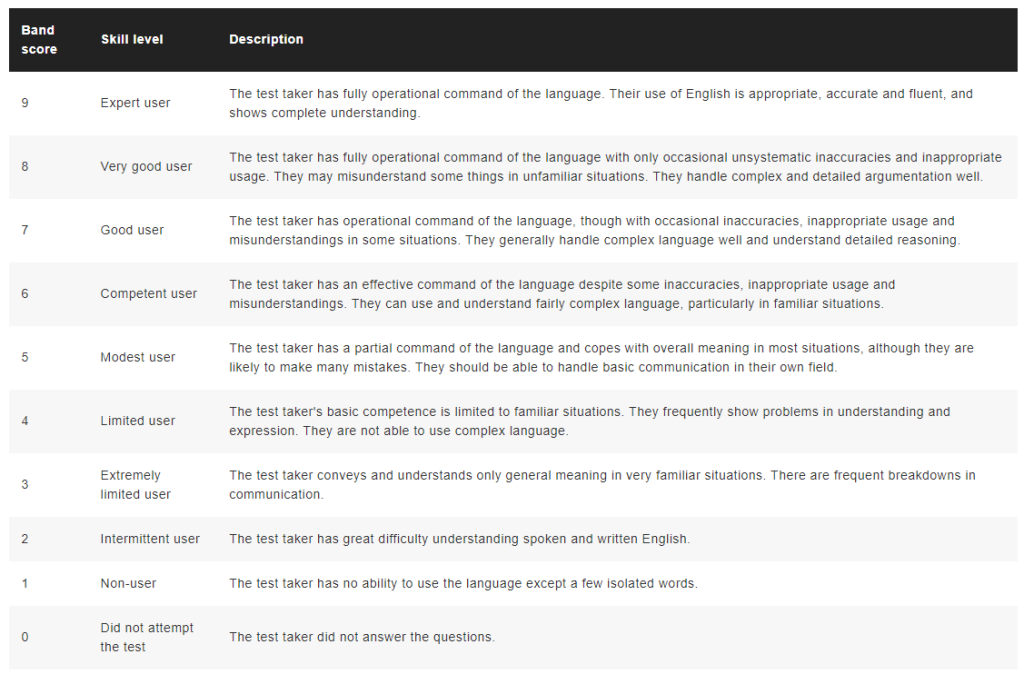
This is key to determining the program you can apply to. On one hand, if you have a beginning level of English, perhaps the best and only option is to start a study program before thinking about working. On the other hand, if your proficiency is higher (certified by a standardized test such as IELTS) you can consider other immigration options, like the Provincial Nominee Program.
The IELTS scale (1)
Q2: How much money can I invest? Studying and working are compatible?
Immigrating always involves a considerable cost. However, determining how much you’re willing to invest can make or break your immigration options.
For example, you must consider the annual cost of living in the city or province you wish to live in, the average salary for your desired job, and how long it will take for you to recoup your investment.
In addition, there are other factors to look at such as working while studying, the number of hours you are allowed to work, the industry you are planning to work in, etc.
Check out the cost of living of the most popular cities ranked from lower to higher cost of living.
Maybe you initially planned on working in Canada, but you do not qualify for any program. Don’t let that discourage you! After all, there are several pathways to immigrating to Canada; each step counts toward achieving your ultimate goal.
The Canada Super Visa is also known as the Parents and Grandparents Super Visa. Under this permit, parents and grandparents of permanent residents and citizens can visit their relatives for up to 2 years at a time. So it is much better than a Standard Visitor Visa!
The general requirements are:
A letter of invitation from your son or grandson.
Proof that your child or grandchild meets the minimum family income requirements.
Proof of payment of Canadian health insurance, valid for at least 1 year from the entry date.
It is important to note that a letter of invitation does not guarantee that a visa will be issued. The visa offices only use this to determine whether the applicant satisfies the terms and requirements of Canadian immigration law.
Additionally, take into account that a number of other factors are taken into consideration by the officers, including the purpose of the visit, the stability of the home country’s economic and political systems, and their ties to that country.
Why is it better than a Standard Visitor Visa?
One of the biggest benefits of the Super Visa is that allows the person to enter Canada multiple times for up to 10 years. It is possible for individuals to stay in Canada for a maximum of two years at a time. In contrast, a 10-year multiple entry visa (Standard Visitor Visa) only has a six-month visit period for each entry into the country.
Canada’s Start-up Visa Program targets immigrant entrepreneurs with the skills and potential to build innovative businesses in Canada that can create jobs for Canadians and compete on a global scale.
There are many reasons why Canada is the best place to build your business as an entrepreneur. Canada’s advantages include:
A strong economy
Low taxes and low business costs
Excellence in research and innovation
High quality of life
In addition, there are more than 50 Canadian venture capital funds, angel investor groups, and business incubators designated to participate in the program.
Last but not least, entrepreneurs who participated in the program in the first 3 years received over $3.7 million in investment capital from designated entities to help them grow their businesses in Canada.
What are the requirements of this visa for entrepreneurs?
There are four requirements you need to meet to be eligible for a Canadian start-up visa:
Prove your business is supported by a designated organization
Meet ownership requirements: You must hold at least 10% of the voting rights attached to all shares of the company. Together with the designated organization, you must hold at least 50% of the voting rights attached to all shares of the company.
Meet the minimum language requirements (CLB 5 in all areas) in English or French; and
Show sufficient funds to settle in Canada.
Not sure if you qualify? Don’t know where to start?
If you are still in doubt that whether the Start-Up Visa Program in Canada is for you, take our free online assessment to determine your eligibility. .is super important
Or contact us today! One of your licensed immigration consultants will be happy to help you.
New Immigration Programs Pave Way for Health Care and Essential Workers
Exciting news! The Honourable Marco E. L. Mendicino on on April 14th, 2021 announced that there will be a focus on new pathways for temporary workers in healthcare, essential workers, and international graduates who are already residing in Canada.
“The pandemic has shone a bright light on the incredible contributions of newcomers. These new policies will help those with a temporary status to plan their future in Canada, play a key role in our economic recovery and help us build back better. Our message to them is simple: your status may be temporary, but your contributions are lasting—and we want you to stay.” Says Mendicino.
Effective May 6th 2021, Immigration, Refugees and Citizenship Canada (IRCC) will launch 6 new pathway streams for permanent residency for over 90,000 health care, essential workers and international graduates who have been actively contributing to Canada’s economy. Including the French-speaking temporary residents, these workers and graduates who are already in Canada possesses the skills and experienced needed to fight through the pandemic and to accelerate Canada’s economic recovery. These new streams will pave the way for thousands of new immigrants to receive Canadian permanent residence status.
IRCC will be accepting applications through the following 3 streams:
20,000 applications for temporary workers in health care
40,000 applications for international students who graduated from a Canadian institution
To be eligible for the three new streams announced, temporary workers must have at least one year of Canadian work experience in a health-care profession or in select essential occupations. International students must have completed an eligible Canadian post-secondary education within the last 4 years, no earlier than January 2017. All workers and graduates will need to meet the language proficiency of at least CLB 4 in English or French and the test results must be no less than two-year-old when application is received.
To promote Canada’s official languages, three additional streams with no application cap for healthcare workers, essential workers and international graduates who are French-speaking or bilingual in English and French. Candidates will need to meet the same requirements for the health-care, essential occupations and graduates in addition to French language proficiency of at least CLB 4 and the evaluation must be no less than two years old when the application is received.
The 6 new streams will remain open until November 5th, 2021, or until they have reached their application cap (not including the French-speaking or bilingual candidate applicants). The announcement of these new streams aims to help achieve Canada’s 2021 immigration Level’s plan, which is expected to welcome 401,000 new permanent residents. The plan will help create jobs and drive long-term growth in Canada. We have already seen the historical federal drawing which invited all 27,332 candidates in the Canadian-Experience Class Express Entry pool. Canada has welcomed over 50,000 new permanent residents thus far.