Employers and temporary workers to benefit from family work permits to address labour shortages
As the Canadian economy recovers, employers, including tourism industry employees, have had difficulty finding workers. However, an announcement stated that temporary workers would now be eligible to obtain work permits for their families
On Friday, Minister of Immigration, Refugees and Citizenship, Sean Fraser announced that family members of temporary foreign workers will be eligible to apply for work permits.
Canada is expanding work permits for family members! Starting in 2023, spouses and children of a principal applicant will be eligible to work in Canada. https://t.co/einP1Op4RC
“Expanding the eligibility for work permits to family members accompanying the principal applicant to Canada will help address labour shortages by assisting employers in finding the workers they need,” he said in a press statement.
Before this announcement, spouses were only eligible for a work permit if the principal applicant worked in a high-skill occupation. However, temporary workers will benefit from family work permits starting in 2023.
Families will be kept together as part of this temporary measure. By that, workers’ emotional well-being, physical health, and financial security will improve. Ultimately, the goal is to provide the worker with a better integration into their work environment and community.
Phase 1 will enable family members of workers coming to Canada through the high-wage stream of the Temporary Foreign Worker Program or the International Mobility Program to apply for an open work permit.
Phase 2 aims to expand the measure to the family members of workers from the low-wage stream of the Temporary Foreign Worker Program, following consultations.
Phase 3 will include consultation with agricultural partners and stakeholders to assess operational feasibility for expanding the measure to family members of agricultural workers.
Canada has issued over 645,000 work permits between January and October 2022—nearly 4 times more than the 163,000 issued over the same period in 2021.
“Should I apply for a work permit or a student permit? Is there a better option for me? Which path should I follow?”. We receive this type of question all the time and, to be honest, there is not a straight answer as a number of factors go into this decision. However, you can use these three questions to help you decide.
By having realistic expectations, you can work efficiently towards your immigration goals. So let’s dive right into it!
Q1: What is my English proficiency? Is it important to work or study in Canada?
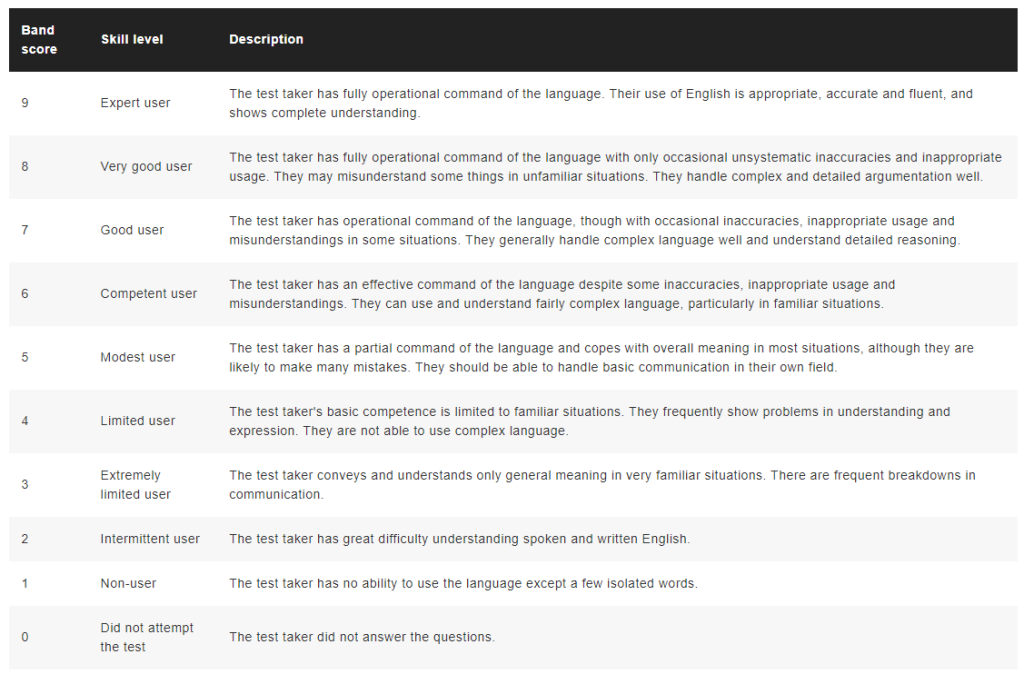
This is key to determining the program you can apply to. On one hand, if you have a beginning level of English, perhaps the best and only option is to start a study program before thinking about working. On the other hand, if your proficiency is higher (certified by a standardized test such as IELTS) you can consider other immigration options, like the Provincial Nominee Program.
The IELTS scale (1)
Q2: How much money can I invest? Studying and working are compatible?
Immigrating always involves a considerable cost. However, determining how much you’re willing to invest can make or break your immigration options.
For example, you must consider the annual cost of living in the city or province you wish to live in, the average salary for your desired job, and how long it will take for you to recoup your investment.
In addition, there are other factors to look at such as working while studying, the number of hours you are allowed to work, the industry you are planning to work in, etc.
Check out the cost of living of the most popular cities ranked from lower to higher cost of living.
Maybe you initially planned on working in Canada, but you do not qualify for any program. Don’t let that discourage you! After all, there are several pathways to immigrating to Canada; each step counts toward achieving your ultimate goal.
The Canada Super Visa is also known as the Parents and Grandparents Super Visa. Under this permit, parents and grandparents of permanent residents and citizens can visit their relatives for up to 2 years at a time. So it is much better than a Standard Visitor Visa!
The general requirements are:
A letter of invitation from your son or grandson.
Proof that your child or grandchild meets the minimum family income requirements.
Proof of payment of Canadian health insurance, valid for at least 1 year from the entry date.
It is important to note that a letter of invitation does not guarantee that a visa will be issued. The visa offices only use this to determine whether the applicant satisfies the terms and requirements of Canadian immigration law.
Additionally, take into account that a number of other factors are taken into consideration by the officers, including the purpose of the visit, the stability of the home country’s economic and political systems, and their ties to that country.
Why is it better than a Standard Visitor Visa?
One of the biggest benefits of the Super Visa is that allows the person to enter Canada multiple times for up to 10 years. It is possible for individuals to stay in Canada for a maximum of two years at a time. In contrast, a 10-year multiple entry visa (Standard Visitor Visa) only has a six-month visit period for each entry into the country.
If you have elderly parents or grandparents and have tried to bring them to Canada to be with you, we have good news. All of those applications that have been pending for so long will now be processed.
Recently, Minister Jason Kenney made an attempt to “reduce the number of elderly relatives of immigrants” based on the “social services they will consume.” He obviously did not realize how important extended family is. Bringing your parents or grandparents to Canada will give you the opportunity to work more hours and earn more money while still knowing your children are growing up in a loving family environment. Minister Kenney’s viewpoint, fortunately, has not been accepted in Parliament.
On Friday afternoon, the news was released that the Canadian government will be reducing the visa backlog for elderly relatives of immigrants. Imagine how Minister Kenney felt when he had to make that announcement! The program is called the Action Plan for Faster Family Reunification and has four parts:
60% more sponsored parents and grandparents will be admitted to Canada next year.
A new visa, called the “Parent and Grandparent Super Visa” is being released. This is a 10-year visa that allows parents and grandparents to spend up to 24 months at a time in Canada. Instead of waiting 8 years to get a visa, your parents and grandparents will only need to wait 8 weeks! This new visa is being released on December 1, 2011, so contact us now!
The Canadian government will be considering public opinions when formulating its new policies.
The Canadian government will not be accepting any more parent or grandparent sponsorship applications during a temporary pause of up to 24 months while they reduce the backlog. This may sound bad, but considering the 8-year waits of the past, a 2-year wait is progress!
Until the sponsorship pause is complete, we will not be able to file parent or grandparent sponsorship applications for you, but we can file for the Parent and Grandparent Super Visa! Please contact us today to find out the fastest way to bring your elderly relatives to Canada to live with you!